Modular Construction : Growth, Confidence, and the Case for Measured Sustainability Performance
Modular construction in the UK is entering a more confident phase. What began as a response to speed, labour shortages, and delivery risk is now evolving into a strategic growth model for housing, healthcare, education, and commercial assets. As the market scales, however, expectations are changing. Clients are no longer persuaded by efficiency alone, they want evidence of value, including environmental value. This shift is redefining what a competitive modular offer looks like.
This is where modular construction’s next edge is emerging not just in how fast buildings are delivered, but in how clearly their performance, commercial and environmental, can be demonstrated.
Sales, Investment, and Confidence in the Sector
Investor and client interest in modular construction has grown alongside its technical maturity. Public-sector frameworks, institutional investors, and large developers are all playing a role in normalising offsite delivery. At the same time, modular manufacturers are expanding capacity, investing in automation, and refining product platforms to support higher volumes and more consistent output.
This shift has implications for sales. Buyers are now comparing modular systems not only on price and programme, but on long-term performance, risk reduction, and alignment with policy and ESG commitments. In this context, credibility matters. Claims around sustainability, durability, and efficiency must be supported by data that can withstand scrutiny.
Sustainability as a Commercial Expectation
For many institutional and public-sector clients, sustainability is no longer a differentiator, it is a baseline expectation. As operational energy performance improves across the sector, attention has moved decisively toward embodied carbon, materials, and supply chains. For modular construction, this presents both an opportunity and a challenge.
While offsite manufacturing can reduce waste and improve material efficiency, these benefits are not uniform across all systems or designs. Without measurement, it is difficult for clients to understand where genuine advantages exist or how one modular solution compares to another or to traditional construction.
Linking Growth to LCA and EPDs
This is where tools such as Life Cycle Assessment (LCA) and Environmental Product Declarations (EPDs) become strategically relevant. Rather than being sustainability add-ons, they act as enablers of market confidence.
LCA allows manufacturers and developers to understand where impacts occur across materials, manufacturing, transport, and end-of-life. In a factory-based system, where processes are repeatable, this insight can be translated directly into design improvements, material substitutions, and operational efficiencies.
EPDs take this a step further by converting complex life cycle data into standardised, third-party verified information that can be used confidently in specification, procurement, and planning. For sales teams, EPDs reduce friction. For clients, they reduce uncertainty. For the wider market, they establish a common basis for comparison.
At InstallerSHOW 2025 at the NEC Birmingham, live modular build demonstrations showed that early-stage LCA can deliver around 24% embodied carbon reductions against LETI benchmarks, while also highlighting how the absence of product-level EPDs continues to constrain procurement confidence as whole-life carbon requirements, such as Part Z, gain momentum.
Similarly, discussions at the Industrialised Construction Conference 2025 in Coventry drew on modular commercial pilot projects to show 20–30% emissions reductions achieved through factory optimisation, with a clear consensus that verified LCA and EPD data is increasingly critical for accessing public-sector frameworks and scaling industrialised construction models.
Measured Performance as a Growth Enabler
As modular construction continues to scale, measured performance will increasingly shape who wins work and who does not. Manufacturers that can demonstrate clear, verified environmental data alongside cost, programme, and quality will be better positioned to:
· Compete in public-sector and institutional procurement
· Support client net-zero and reporting requirements
· Strengthen trust with investors and regulators
· Identify internal opportunities for cost and carbon reduction
In this context, LCA and EPDs are not just reporting mechanisms but are the commercial infrastructure for a growing sector.
Looking Ahead
The modular construction market is moving from early adoption to consolidation and scale. In this next phase, success will depend on confidence: confidence in delivery, confidence in quality, and confidence in performance.
Those who pair modular construction’s inherent efficiencies with transparent, measured environmental data will not only meet rising expectations, but they will also help define the standards by which the sector grows.
Author: Padmapriya Ramamoorthy Sustainability and ESG Consultant, Elemental Consulting Group

Elemental Consulting Group helps manufacturers turn that ambition into results. We offer a full suite of solutions from carbon audits, energy modelling, and whole-life carbon assessments, to EPDs, sustainability certification support, and monitoring.
Our team also provides carbon forecasting, develops carbon management plans, and validates targets against SBTi standards. By combining expert consulting with practical tools, we enable offsite manufacturers to reduce operational emissions, achieve net-zero goals, and maintain a competitive edge in a carbon-conscious market.
Follow us Elemental Consulting Group for regular updates or contact via hello@elemental.org.uk. More information on our website www.elemental.org.uk
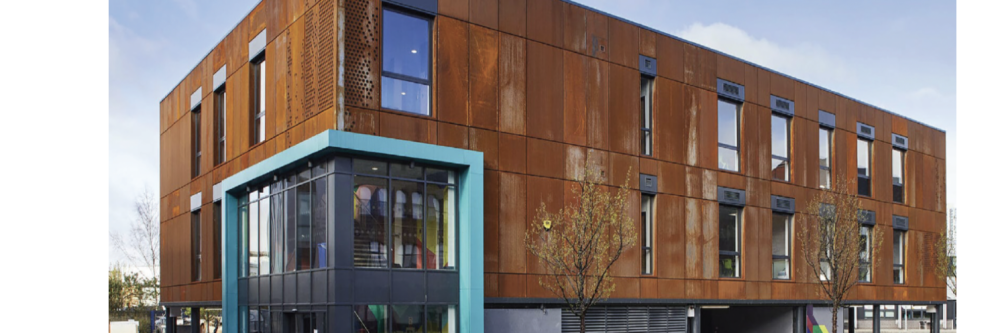
Cover Image Use Courtesy of Premier Modular