Rethinking the Role of the Security Gatehouse
Rethinking the Role of the Security Gatehouse
Once viewed as a simple point of access, the modern gatehouse now plays a far more critical role in site security and operational performance. As organisations face increasing pressure to manage access, maintain compliance, and protect people and assets, the gatehouse is being re-evaluated as a strategic control point rather than a secondary structure.
Across sectors such as logistics, education, and high-profile public venues, the gatehouse has become the first and most visible layer of operational control. Modular construction is playing a key role in this shift, offering organisations greater flexibility, speed of deployment, and design control.
The Gatehouse as a Strategic Control Point
Positioned at the point where people, vehicles, and security decisions are managed, the gatehouse is where access permissions are verified, movements are controlled, and first impressions of a site are formed. Poorly designed gatehouses can create congestion, reduce visibility, and place unnecessary strain on security teams.
By contrast, a well-designed gatehouse supports efficient traffic flow, enhances perimeter control, and provides a safe and effective working environment for staff. As a result, organisations are taking a more considered approach to how these buildings are specified and delivered.
Why Modular Construction is Changing Expectations
Modular security gatehouses offer a fundamentally different approach to traditional on-site construction. Manufactured off-site in controlled conditions, they can be installed rapidly with minimal disruption, a critical advantage for live and operational sites.
Modular construction also enables a higher degree of customisation. Layouts, glazing, finishes, and technology readiness can be designed around the specific operational requirements of a site, ensuring the gatehouse supports long-term security and compliance needs rather than acting as a short-term solution.
Gatehouse in Practice: Real-World Examples
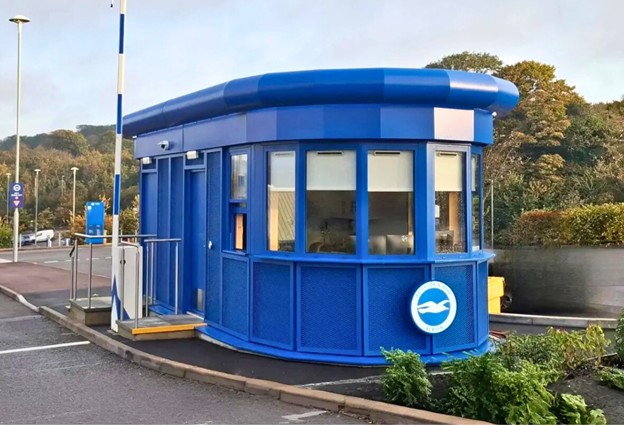
Examples of this shift can be seen across a range of operational environments. A strong example of a well-designed security gatehouse is located at Brighton & Hove Albion’s Amex Stadium, where access requirements vary significantly between matchdays and non-event use. This gatehouse supports secure and efficient entry management while remaining adaptable to fluctuating visitor volumes and operational demands.
Beyond its day-to-day function, the gatehouse fits naturally into the wider stadium setting. Its appearance reflects the surrounding buildings, helping it feel like part of the site rather than a standalone security structure. This gatehouse shows how security buildings can be designed to feel like part of the site, rather than something added on purely for control.
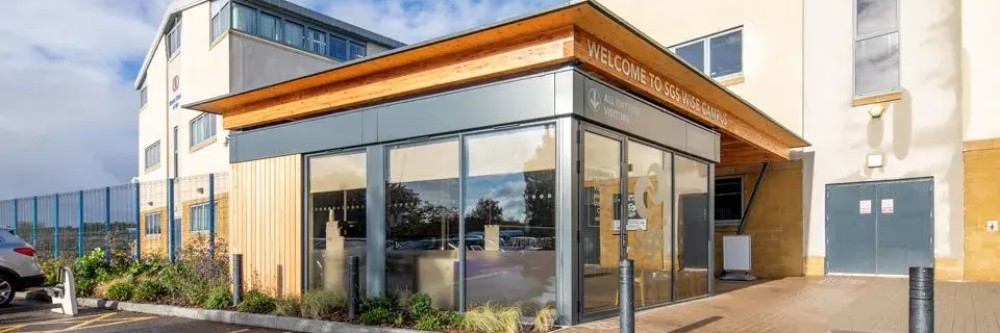
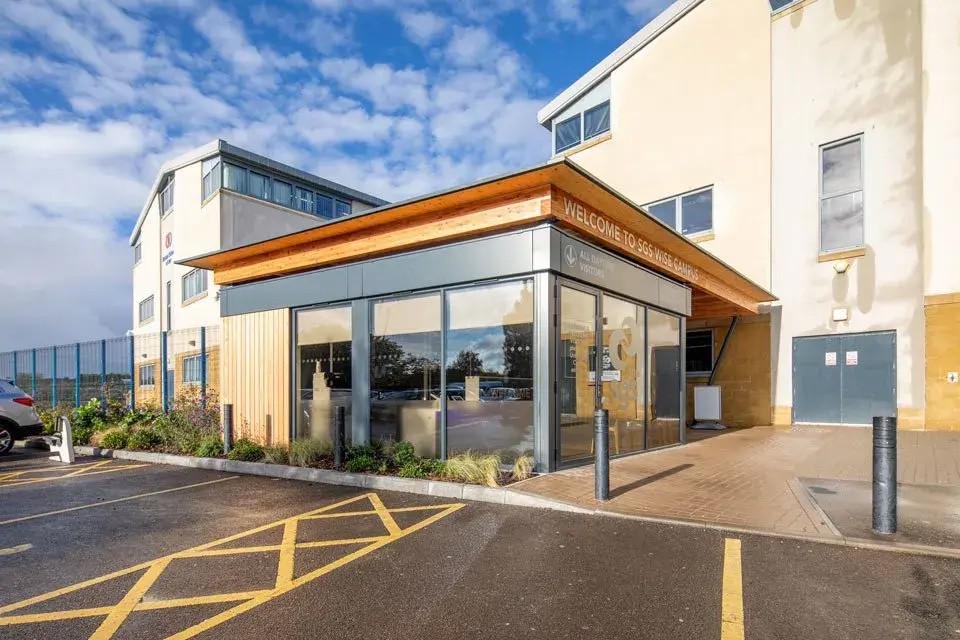
A similar approach can be seen at SGS WISE campus, where this gatehouse manages site access and provides a clear point of arrival for visitors. Located at the campus entrance, the six-metre square building supports day-to-day access control while fitting comfortably within the wider site.
The design shows how modular buildings can move beyond standard forms, creating a modern and welcoming presence through features such as a floating roof canopy, generous glazing, and natural cladding. Sustainability is also built in, with an air source heat pump that provides energy-efficient heating and helps to reduce the building’s long-term carbon footprint.
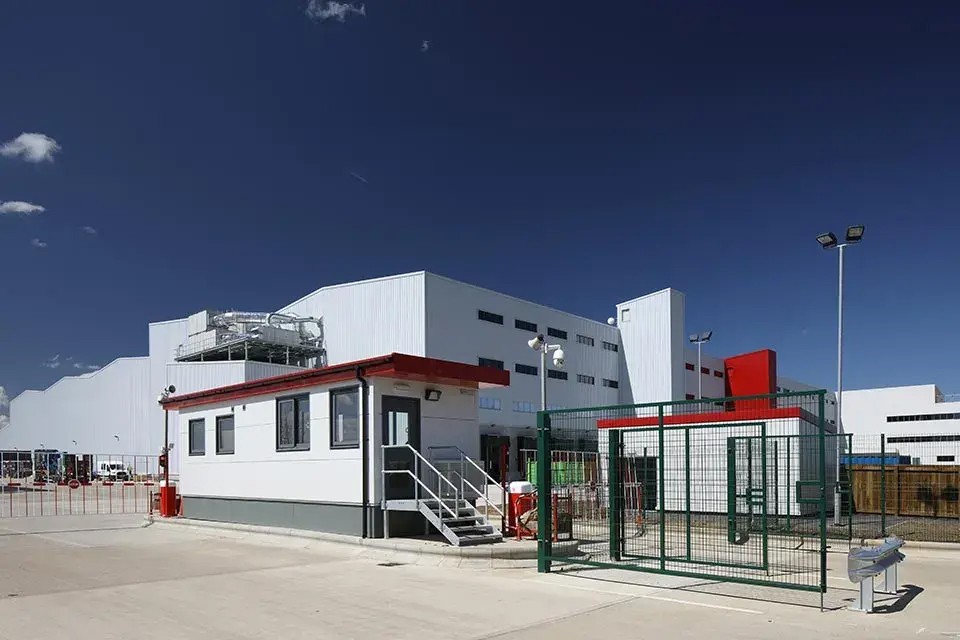
A third example can be found at the Trinity Farm Distribution Centre, where operational efficiency is critical. In a logistics environment defined by high vehicle movements, this gatehouse plays a central role in managing access without disrupting site flow. Positioned at the site entrance, it forms a clear control point while fitting into day-to-day operations
These examples demonstrate how a security gatehouse can function as a strategic control point rather than a purely functional structure.
Designing for People as Well as Protection
An effective gatehouse must support the people operating it. Visibility, thermal comfort, acoustics, and internal layout all influence staff alertness and performance. By considering these factors from the outset, organisations can improve both security outcomes and staff wellbeing.
Modular construction allows these requirements to be integrated early in the design process, creating environments that are practical, resilient, and fit for purpose.
Final Thoughts
A well-designed security gatehouse supports both day-to-day operations and the wider character of a site. When approached thoughtfully, it enables secure and efficient access management, adapts to changing demands, and sits comfortably within its surroundings.
Working with a modular delivery partner experienced in security-focused design helps ensure gatehouses are robust, compliant, and appropriate for their setting. The result is a facility that performs reliably during everyday use as well as at peak times.
Elite Systems GB has delivered bespoke modular security gatehouses across a range of operational environments, including education, logistics, and sport. Get in touch to learn more about modular security gatehouse design.